Beliefs are ideas we accept as true based on what we've learnt.
Here are a few examples:
– Sharing is caring
– People are mean
– What goes around comes around
– Money is the root of all evil
– Old dogs can't learn new tricks
– There’s no such thing as failure.
– Men/Women are not to be trusted.
– If you believe it, you can achieve it.
– Out of sight, out of mind.
– Rich people are greedy.
– Life is good...
Everyone has their own list of beliefs about life, people, relationships, themselves, money, what's important, what is 'correct', what is wrong...and on and on.
The collection of beliefs that you have shapes your understanding of how things work and what is (or isn't) possible.
For example, if you believe that 'people will always take advantage of me', then you're very unlikely to trust someone long enough to have a healthy relationship (until you meet someone who fights through it and proves you wrong).
The problem is that if you had several strong experiences, which really reinforced that way of thinking, then your willingness to challenge that belief might be very low.
"It's been like that before; I've got the evidence for it.
It's going to happen again, it always does!"
That belief is trying to protect yourself from future pain.
Why do something that you are certain it will result in failure?
It's a tough one...
But what you must come to realize is that in whichever area of life you want a different outcome in, your past experiences do not need to be your future ones.
In fact, they must not be, or else you will remain forever stuck with a way of thinking that is known as 'learned helplessness'.
These flees will explain....
Despite being able to jump way outside of the jar, once a lid is placed on top, they learn that it is "impossible" to jump higher than the set boundary.
So they stop trying...even when the limit is no longer there. Their kid's stop trying too.
E.g.
Gets married -> Ends in divorce -> Believes it wasn't worth it
"Let me tell you kid, men/women are not to be trusted."
Tries to lose weight -> Fails to maintain the lifestyle -> Believes they will always be unhealthy.
"Let me tell you kid, being overweight is just in our genes, there's nothing you can do about it."
Gets bullied -> Peers don't help -> Believes that nobody cares about you
"Let me tell you kid, people only care about themselves. You're on your own out there."
Beliefs play such a big part in our lives, and many people are unaware to what depth they exist in themselves.
The problem is that once we form a belief, we often look (without knowing) for the evidence to support it and ignore the evidence that would refute it.
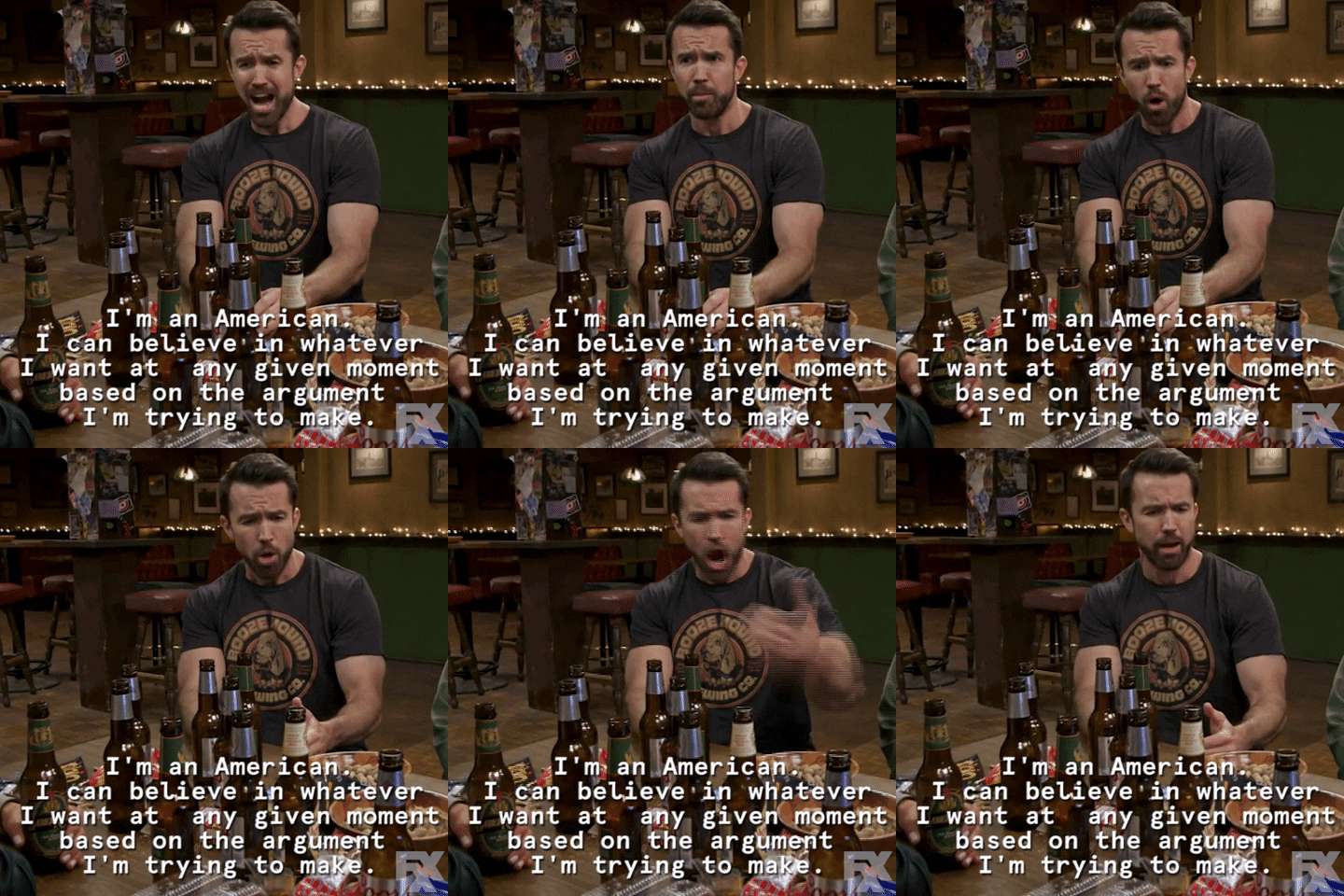
So, how does the power of belief relate to learning? Well...
It is impossible to hold a belief that you can't accomplish something and simultaneously be successful in the actions needed to achieve it.
If you have beliefs that are in the way of you learning something, you will never learn it until a new mindset if formed.
Here's an example from my own life; until today (2/3/26) I felt that I still needed good at math to be really good at chess. I've been practicing, and learning, and making good improvements, but in the back of my mind I had this thought:
"I'm never going to be really good at chess if I'm not amazing at quick math."
The problem is that my mind doesn't naturally think in a mathematical way, and although I can still definitely improve my maths skills, having the belief that I need to be good at math is incredibly limiting and de-motivating.
So, I questioned the idea and decided to find out if it's really true.
This is what I found: youtube.com/shorts/5UXw7P5MUOw?si=R2Q2cd9LQRr8eEpn
It's an interview of chess players (including 2 of the best players in the world) saying that it is a myth that chess needs math skills.
Watching made a belief inside of me change; my body released some tension and I felt instant relief; the vision is clearer.
Yes, some chess players are excellent as math, truly. BUT it is also true that many are not, and it is 100% true that being good at math is not necessary to be good at the game.
People often struggle to reach their goals because they have formed beliefs over the years that block their path to learning (and living) in a different way.
And if they keep asserting those beliefs, they'll either dismiss or never notice or never look for the evidence that dissolves those ideas.
"Ah, they're just smarter than me."
"They can do it because of...."
"I'm not lucky like them"
"They've got more time than me"
"If ______ didn't happen to me, it would be different"
Keep those beliefs, and you will surely never learn what you want to learn.
However, if you get enough evidence that supports the way of thinking you want, and you can completely change your outcome.
Beliefs can be changed and shaped.
A good starting point is to ask yourself: Based on my goals and what I want to learn, what do I need to believe?
That it's possible; (maybe you don't see how you can do it yet, but *it is* possible. Somebody did it, or something similar; it is possible).
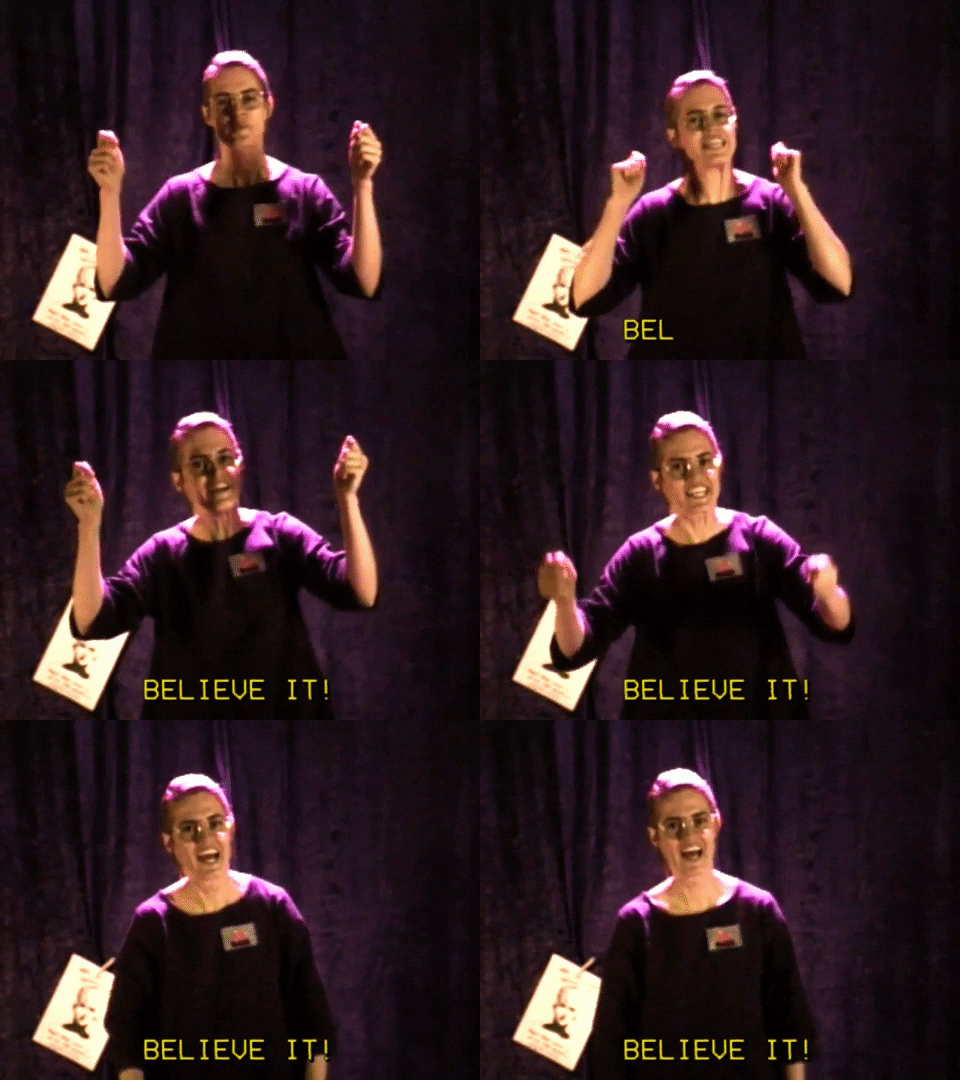
What beliefs do you have about yourself, life, the world, and other people, your capabilities..., which are in direct conflict with how you want to live and experience life?
Have a think....
Write out some of the beliefs you have are that are holding you back, and ask yourself ‘what if this isn’t true?’
I can’t learn ________ because ____________.
I want to be capable of __________ but ___________.
- Why do I believe this?
- Who told me this is true?
- Was it true or were they just expressing their own beliefs?
- Is this belief beneficial or not to me?
- Is this belief supporting me in creating the life that I desire or it is limiting me?
- Is there evidence to support an alternative perspective?
Question anything that makes you feel that you can't do what you really want.
You are human; you've learned before, and you can learn again.